Friday, April 28, 2006

so boring

this is really not much of a post, but my aggregator list is probably twice as long as the blog roll at right. God. I need to clean that up because this crap is b - o - r - i - n - g. This post is probly even boring. yup.

My pick of the week: Art Knowledge News. People could learn a thing or two from Museums outside of NYC.

Monday, April 24, 2006

public rumblings

One of the things I am preparing for the next few days is a discussion, in Spanish, of the differences between "my country" and Mexico. There is something wildly tragic in any discussion of "brothers who grow up with their backs to each other." But one part of that discussion might be useful here.

One of the reasons that "the public" or "a public" is so much more prominent in Mexico is that it serves as a safety mechanism. People know how they are expected to act at times of un-certainty, and rely on protocol to fulfill the space where authority is often un-trustworthy. This has serious drawbacks. It strengthens the problematic and already rigid social and class structure that Mexico has inherited from its history. People are much more able to throw weight around for petty and un-just reasons. But - importantly - people are NOT reliant on external authority. As I wrote earlier, they understand very well that the government was responsible for murdering dozens if not hundreds of citizens. They will more likely call their neighbors than the police. They understand that media is not to be trusted for truth. News for just about anything is met with palpable cynicism, healthy and strong. Citizens in the US would do well to understand once and for all that the age of the benevolant news corporation is very much a thing of (mythical) history. It is well known here that major media openly collaborate with power, no payments or other incentive necessary.

The public here results in opposition to concentrated power. There are loads of problems with that. But for what we've been talking about lately, there is something to be said for an expanded, electronic public. I've never been to a restaurant in the US where members of the exiting party from the table next to mine each pause to say good night as they do here. But I already see more decency and class from artists who meet and collaborate here than I do from those who are "legitimized" by Manhattan or any of the myriad 19th century style institutions that litter the educational landscape. Likewise, whatever it is still creating art tastes in Manhattan has clearly outlived whatever usefulness it once had.

Good art, I still believe is obvious, and not created in secret, by academies sanctioned by government, nor by those sanctioned by bullying pretense.
____________
em dash has a great diary over at Daily KOS on Toqueville and class warfare.

mexico and brazil

Don't know if this will show up with the cool Madero for Presidente banner ad at the top on your end, but this article provides a nice side-by-side of the two countries. I am hoping that goofy Lopez Obrador can learn a thing or two from Lula's playbook. Nice to think about countries that are actually going forward for a change.

public, backwater, other things


Am thinking a lot about these two excellent posts, HighLowbetween's thoughtful post here and Bill's post from a few days ago. I forgot how much school was going to occupy me. One more week. Here's a photo I shot in Tuxtla.

Thursday, April 20, 2006

Fischl at Pennsylvania

I want to emphasize the difference between Fischl's speech summarized in the post linked below with some of the other kinds of statements we're hearing from artists these days.

Fischl was speaking of shared obligation and accountability, not a retreat into isolation and individualism, he challenged the entire artistic community to find its voice and react appropriately to the storms now threatening humanity - and that is the vision to which this web log is wholly dedicated.
This one is too, by the way. Mark Vallen's excellent post captures some of the impetus that a lot of us are working for. Fischl's job is political and defiant and he doesn't cower before an ignorant marketplace shaking his head saying "I have no control over it. I don't even know why I am so successful."

See my previous post on manifesto-ing. Artists who aren't relying on "cool" understand that painting and language are formative processes and we have to fight like hell for the form we want, not blandly accept some marketing nonsense. We make the public, we don't rely on marketers to do it for us.

Don't know why it is so difficult to put into words, but I remember full-well comprehending that the end of modernism meant that visual art was again a part of language. It was no longer the anti-language that late, high, education-crushing abstraction had hoped it to be.

When one is first beginning, of course, one must struggle with styles and messages about the meta-knowledge, the "meaning" of art itself. Other strains, beyond the main philosophical strains of European art come to us from history - social, political, even commercial meanings. But it is a poor reading of history to say that each of us must create a unique (pre-Wittgenstenian) language and then hope the dealers can sell it, independent of any commonality with the people actually looking at it. People will look back from our time and our cowardice before marketers as we look back on any ideology continually declaring its infallibilty in the very face of its failures. In this case it is simply the radical subjectivity of the experience of art being shaken in the face of a beleagured "public." But our public is our public again. We don't rely on the Times or ArtForum to establish things for us. We know who they work for.

And let me just say, I never "liked" Fischl's painting all that much. But then, I no longer see what "liking things" has to do with art. Seeing is not dependent on our taste, but on our ability. And so I like Fischl's vision which is generous rather than beleagured. Certainly that is worthy.


ERIC FISCHL Bathroom Scene#5 (not yet titled (he enters)), 2005, Oil on linen

Wednesday, April 19, 2006

freshness, so underrated

Joel Adas has a nice essay up at Artist's Unite, especially nice after all the crap I have been reading lately. Artist's who can't paint, much less see, enough of thinking. Check it out.

Painting is Lois Dodd.
Red Poppies and House, 2004
oil on masonite, 14 x 16 inches

Tuesday, April 18, 2006

disaster

Via Philobiblon (thanks), will probably waste the rest of the week at Earmarks. The cabinet of curiosities there is like a whole internet of it's own. God, the pics I wanted to snag from there !!

abstraction and american wiring

Something relatively outrageous about the US government mounting an exhibit about Dada. Tyler Green's review nearly does it justice, certainly his tone is fitting. Green does us the service of linking to Blake Gopnik's piece in, of all places, the Washington Post. I'd reccomend skipping that one.

There are numerous reasons for the split with European thinking and surrealism in the advent of Abstraction Expressionism. Of course there are simple reasons like the CIAs involvement which you can read about elsewhere. Probably more important, as Gopnik's fun Public Relations- style brochure typing shows, the English speaking world is less wired for the hard truth about reality than the continent. Prim, proper English would rather not trouble with the gore in which the ruined continent seemed every generation to immerse itself.

So whether I am talking about Dada after the first or Abstract Expressionism after the second world war, after-all, we are trying to tell a story and that story is one of American triumph, not one of other peoples' misery. Whether the misery be Jackson Pollocks at the hands of a psychoanalyst or Hans Richter, god-knows where, all of it is inconvenient to the myth being created, until later, in Pollock's case, when drama is needed for the secondary market campaign on the soap opera.

You see the danger of giving something like this Arp piece to people with no knowledge of history. A bit like giving a car to a 7 year old and then asking him to teach driver's education. I am still particularly fond of Robert Hughe's comparing the lack of training given American artists to a pandora's box. 2 generations on and we have nothing to show for it but a stream of Yale graduates whose MFAs shine mightily like Wharton Business School diplomas. And these Yalies will be as quick to defend Wharton, which not only teaches nothing but lacks even the ridiculous self-reflective mirror that Yale so amply polishes every year.

Ah, but in Wilde's cliche, those of us screaming the loudest just want in. Part of the reason I am writing more now, is because I believe we are truly staring at the collapse of the US constitution. I don't advocate for this or for anything outside of understanding in the arts. Far and broad understanding I hope. I am going to venture closer to understanding "un-intentionality" in the next post but for now I think it might be helpful to send out some life-rafts to the so many of us not simply drinking in the lounge trying to ignore the odd pitch of the ship's bar.


Illustrations are from the National Gallery of Art's page on the Dada exhibit.

Monday, April 17, 2006

pressing

I mean, far be it from me to think that artists would be actually sort of "connected" with the world, not inhabiting some angry small bubble world. I guess Ian Welsh at Firedoglake is probably saying a lot of new stuff that just hadn't been previously considered. I mean, it's not like the same corporations pushing this stuff are also building concentration camps or anything. Oh, wait...

the little s

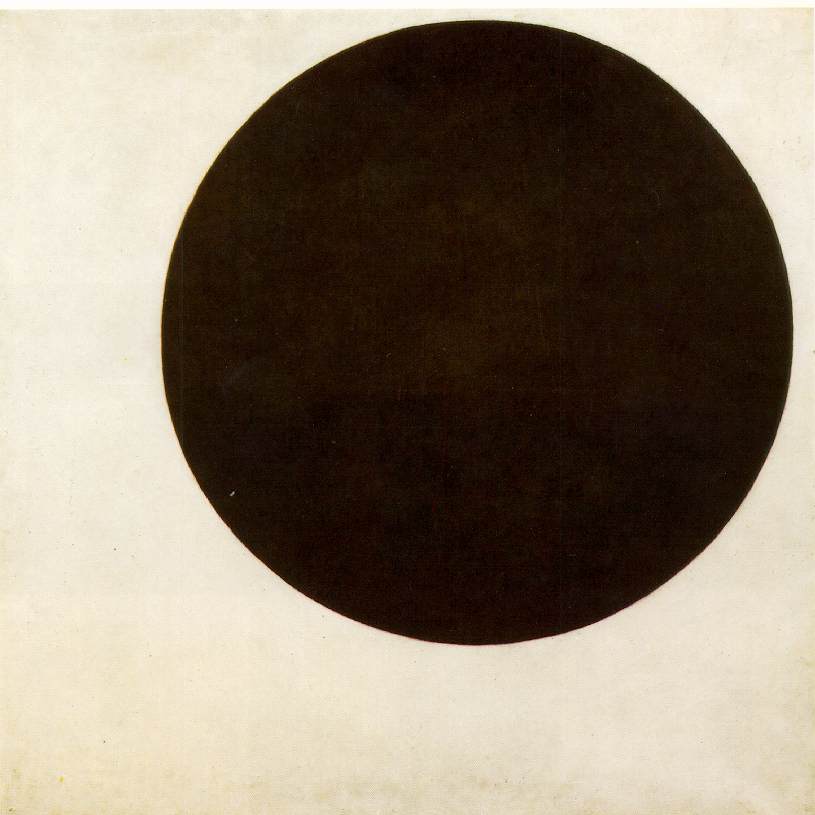
The difficult thing when you get to talking about the end of abstraction, from a political point of view, is that you begin treading into the most sacred of sacred cows. What seems to have become the official doctrine, is not the logical progression from European thinking about art, but a co-opted and sacralized version of it that is reinforced by every externalised, official voice that can be mustered. It wasn't enough to merely progress from the thinking, it was necessary to create an alternative reality where artist's weren't merely working in thought or in image, but were creating a new kind of "humankind." A total break was necessary. Of course the Soviets realized the haphazardness of this project in about 1924. In our time, the paintings aren't critiqued, but the personality is critiqued. The artist is "cool," and manages his career effectively. And the paintings, however insignificant, are secondary to the careerist project. But I will talk a bit more about the abrupt nature of the split between abstract expressionism and "abstractionism" in a subsequent post. Going forward I believe I will use the terms surrealism (small s) and European thinking interchangeably, just to make things more surreal.
____________
In case you thought such things only happen in the art world.

little water

Among the first things to impress me about Mexicans and Mexico was being offered, on a couple of separate occasions, a truly world class vodka - Wyborowa. Really makes any party a lot classier if the vodka is Polish. Funny, I guess the Spanish colonial prohibition on wine making, made Mexico not only one of the world's great "beer cultures" but also left them good taste in the clear stuff. LA Times has a good article about the Poles and the Russians battling it out for who thought the stuff up.

jane freilicher


Nice
, from Terry Teachout's top 5.

Sunday, April 16, 2006

day without people

American Citizens are too ignorant to understand that world-wide celebrations of May Day each year heralds the struggle of American workers for rights and justice and fair living standards.

Let's hope this year, all the new American's can remind us..

so what was it i was shooting my mouth off about ?

Oh yeah, abstract expressionism, or it's more lively and never-dying american freak bastard child "abstractionism." We've seen it now beget another horrible off-spring, "un-intentionalism" which is truly at the heart of what many of us are complaining so miserably about. Particularly in painting, "un-intentionalism" has been the tall mount and steed of the worst painters of the last 30 years. Of course, it is also their strongest defense. How do you know what I intended ? Of course, no one could ever intend anything because that would show some sort of objective bias, and we all know, objective bias is impossible when we live in this little understood world of radical subjective bias.

We understand that Abstract Expression was born from the psychoanalytic meanderings of a few Central Europeans and whisked off to the US where it was given official anti-communist blessing and turned into the cause celebre of that other Manhattan, the historical one that no longer exists. Midway into it's adolesence, it was joined by two other screechey siblings, pop and fluxxus. Pop retained it's English aloofness, Fluxxus wanted too much of the real world, just like Yoko wanted Rock when her fellow-artists all screamed for classical. And so Abstraction was allowed to grow into the megalithic bombastic and horrible in-humane official DOCTRINE of the CAA and the universities and the scramblers looking for cover beneath copies of October magazine. Abstraction's euro cousins returned to fertile matter and have survived without having to watch their world collapsing, as ours is, now. Make no mistake.

Dogeared copies of Greenburg and Friedman later, we've got no excuse for dropping the ball on what Abstract Expressionism was trying to do. Even bolstered by pop, fluxxus and minimalism, we still want to insist that "un-intentionalism" (as I am using to refer to all of the horrible "subjectivists") is the natural end state of things.

I am not advocating a return though, to droopy clocks, and "weird things," dream scapes and fantasy illustrations. I am asking you to look at what you like, and, if any of it is representational, or if there was intention involved in its creation, does it relate to what you think was the broader project of surrealism ?

what exactly is it ?

Of course, I want to be clear. I find "surrealism," at least in my present understanding rather repellant. That was what motivated me to start asking questions about it in the first place. I find the remaining fasicination that Latin peoples feel for Jim Morrison and the Doors, Pink Floyd and 1950s Americana utterly repugnant. Thankfully these things are beginning to fade at long last. The Grease soundtrack is no longer played in discos here.

I don't understand places and people with flat roof-tops, but I try to. I don't understand why mediteraneans and Mexicans, young and old, see fit to make out, kissing heavily in public places, either. Seems decidely indiscreet to me. I've more than once crossed a city park here and disturbed a not-at-all attractive pair of office workers enjoying a triste on a bench. That's never happened to me in the US.

It is easy for me, though, to think of early Russian abstraction, Suprematism and such as precursors of Surrealism. Fauvism, likewise, is not so much scientistic as it is expressionistic, but expressing what ? Liberation ? I'd argue it was all a bit more emotional than expository.

If we pick up anything from the early 20th century though, it seems decidely more italian in all of the nasty and pedantic political posturing. And that's where I'll pick up next time... to discuss Abstract Expressionism and the real split with "thinking."

Opus Dei asking for anything ...


via Huff Post, if the fascist wing of the Catholic Church asks for anything, well god , I guess we know what to tell them.

silly neo-cons

Via 3quarksdaily, this terrific interview with Peter Beinart in the Atlantic.

the paradox of style


The funny thing is, surrealism is treated like it is a mere "decorative" tradition, at least in the sense that the smug modernist position of the northern europeans and the gringos like to dabble a bit in the thought, but basically only remember it for its drooping clocks, a razor across an eyeball, a fur tea-cup, as if it was a "style." Of course, in places like here (Mexico), places that weren't interupted quite so heartily by the full blown post-linguistic explosion of Surrealism, that is, abstract expresionism and just plain old ruinous (and really post-linguistic) "abstractionism," - well in places like this, Surrealism is of course, much more a continuation of 19th century realism and symbolism, propped up decoratively, by lots of Nouveau and Deco. That is to say, it is not so much one in a series of little understood movements. Rather, it is the visible continuation of a still not quite over history.

But I want you to keep an eye out, in what you are looking at these days, and tell me that a lot of it doesn't look suspiciously surreal. If i am feeling ballsy I think I might post another post with about 7 million examples of surrealism in contemporary art, and then talk about why we all find it so, ummm, mid-century (?)

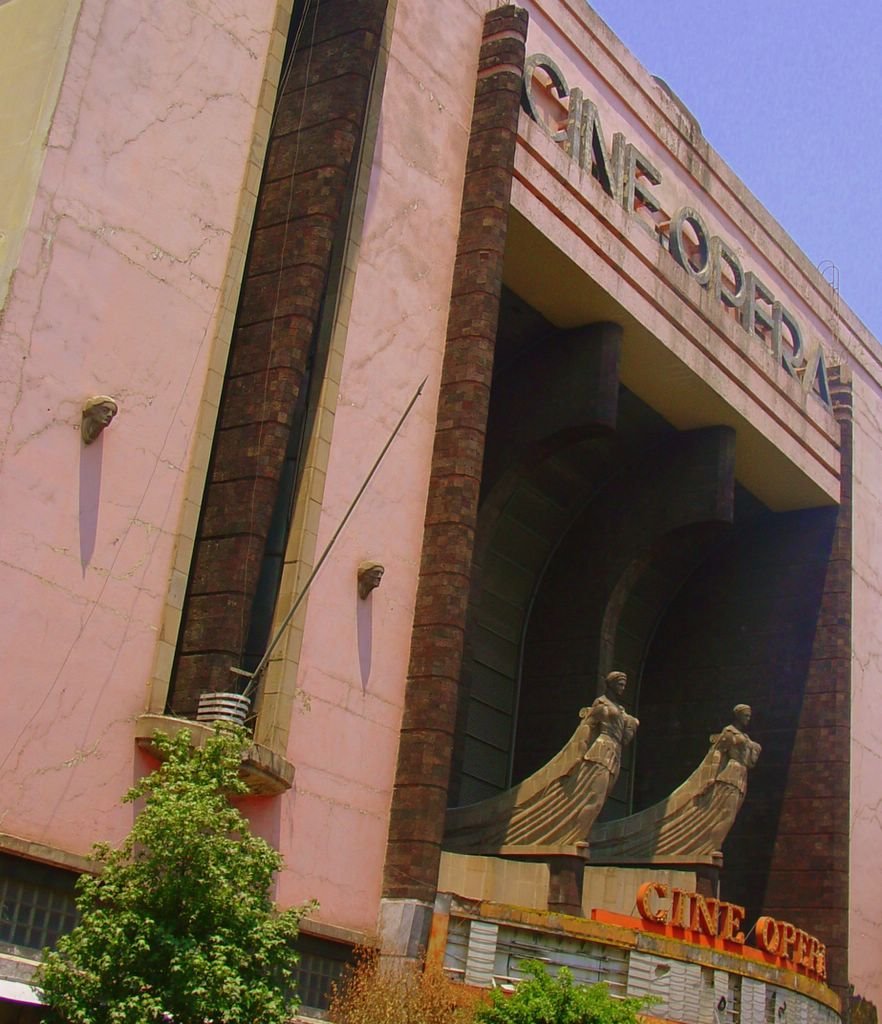
By the way, that's the old Cine Opera, in San Rafael, Mexico City, fantastic and empty, cool cave air blows out the front of it and onto the sidewalk.

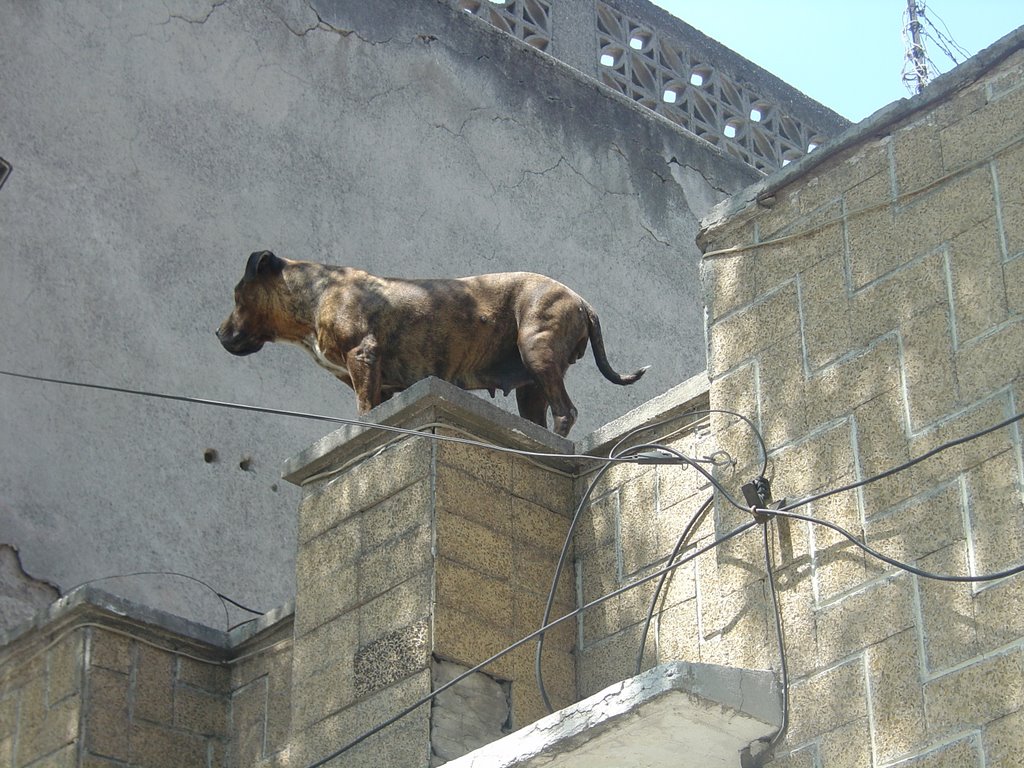
One of the first things I realized I wanted to do when I arrived in Mexico was to understand why Surrealism seems to have sunk in deeper and with more voracious roots here than in more northerly places. To the gringo brain, Surrealism is a mere modernist movement, albeit one of the big ones, stuck in the middle of the 20th century where it begins and ends. This is far less true here and, I suspect, in the mediteranean.

Saturday, April 15, 2006

blackhawk up


Look at Geoffrey's post on Pocket Lining. I wonder if Republicans believe that Sikorsky Aircraft is a free-market business, a business that competes with others to sell the best product at the highest price. Does it have rights as a corporation the same as you and I ? the same as other corporations, that is, freedom from taxation ? I wonder if George David's congressman and senators know his name. I've decided to write my thoughts on paradox in a series of posts rather than in the monolithic essay I am un motivated to finish.